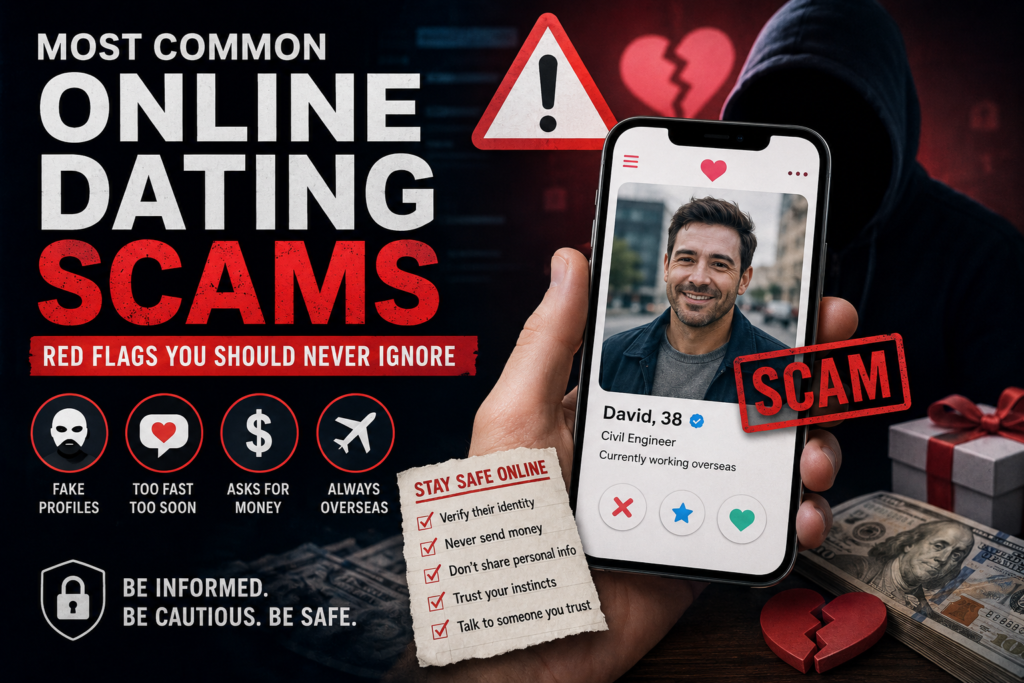
My neighbor Linda is one of the sharpest women I know. Retired nurse, raised three kids on her own, never let anyone push her around. When her marriage ended after 27 years, a friend convinced her to try online dating. She met a man named David, a civil engineer working in Qatar. Thoughtful messages every morning. Long phone calls about life and dreams. Four months of what felt like genuine connection.
Then David’s equipment got seized at customs. He needed $8,000 to release it or he would lose his contract. Linda sent it. Then his bank account got frozen. Another $6,000. By the time her daughter sat her down and showed her that David’s photos belonged to a random man in Portugal, Linda had sent $31,000 to someone she had never actually met.
She still does not talk about it much.
Linda is not the exception. According to the FBI, Americans lost over $1.3 billion to romance scams in 2022, and that number only reflects what people actually reported. Most victims never say a word because the shame feels unbearable. You fell in love with a fiction and lost money doing it. How do you explain that to people who were not there feeling what you felt?
You probably landed on this article because something feels off. Maybe you are in the middle of something that started beautifully and has started to feel strange around the edges. Maybe you are researching before you get too deep. Either way, what follows is everything you actually need to know about common online dating scams, written straight, without judgment.
Why These Scams Work on Normal, Intelligent People
Before anything else, I want to address this directly because it matters.
These scams do not work because victims are naive or desperate or foolish. They work because the people running them are genuinely skilled at manufacturing emotional connection, and emotional connection is not something the rational part of your brain controls. The part of you that feels love and attachment and trust is not the same part that evaluates financial risk. Scammers know this and exploit it deliberately and systematically.
These are not lone individuals sitting at a laptop. Many common online dating scams are run by organized criminal networks with teams of operators, psychological scripts, and sometimes entire departments dedicated to different stages of the manipulation. Some of the larger operations have been found to employ victims themselves, people trafficked into compounds in Southeast Asia and forced to run scam accounts under threat of violence.
The FTC has found that people in their twenties are actually more likely to report losing money to online fraud than people over seventy. Older adults lose more per incident, but the idea that only a certain type of person falls for this is simply not true. So if you or someone you care about has been through this, start there.
The Most Common Online Dating Scams Running Right Now
1. The Classic Romance Scam
This is the one Linda fell for, and it has been running in various forms for as long as online dating has existed. A profile is created using photos stolen from someone’s social media, usually attractive, usually professional-looking photographs of a real person who has no idea their images are being used this way.
The scammer builds something that genuinely feels like a relationship. And over weeks or months, you develop real feelings for someone who does not exist.
Then something goes wrong. It is always urgent. It is always emotionally compelling. A medical crisis. A business deal collapsing. Equipment seized. Legal trouble that came out of nowhere. The first ask is usually modest, designed to see how you respond. You send it. The next ask is bigger. And then bigger again.
The profession is always something that explains the distance. Oil rig engineer. Military contractor. International surgeon with Doctors Without Borders. Offshore construction. Something that sounds impressive, keeps them abroad, and gives a ready excuse for why meeting keeps getting pushed back.
What specifically to watch for: Overwhelming romantic intensity within the first few weeks. Professional-quality photos but almost no actual social media presence. Every attempted video call fails or gets postponed with a new explanation. The relationship is somehow always kept private from your friends and family.
2. Pig Butchering: The Cryptocurrency Investment Scam
This one is growing faster than any other category of common scams on dating sites right now, and the financial damage it causes dwarfs everything else on this list. The name comes from a Chinese phrase describing the practice of fattening a pig before slaughter. It is not a subtle metaphor.
It starts like a romance scam. Someone attractive connects with you, builds genuine rapport over time, and the relationship develops naturally. At some point, they casually mention they have been making impressive returns through a cryptocurrency investment platform. Their uncle developed it. Their financial advisor introduced them to it. They were skeptical at first, but the returns have been remarkable.
They offer to show you. They help you set up an account on the platform. The interface looks completely professional. Your balance starts growing. You can even make a small withdrawal, and it actually arrives in your account. This is intentional. It is designed to make you trust the platform completely before you commit serious money.
Then they encourage you to invest more. You do. More again. When you eventually try to withdraw a significant amount, something blocks it. A tax payment is required before funds can be released. An account upgrade is necessary. A verification fee. Each solution requires sending more money in. The platform, of course, is entirely fake. The money is gone, and so are they.
The Global Anti-Scam Organization found that individual pig butchering victims lose an average of over $179,000 each. Some lose everything. Retirement savings. Home equity loans. Money borrowed from family members who thought it was going to a genuine investment.
What specifically to watch for: Any romantic connection who brings up investment opportunities is an immediate serious warning sign. Any platform you have never heard of promising consistent returns that sound too good to be true. The fact that you can make a small withdrawal early, which feels reassuring, is actually the hook. It is designed to make you feel safe before you commit life-changing amounts.
Read Also: Cloud Storage vs Local Storage: A Complete Comparison
3. Sextortion
This one moves fast and operates on fear rather than love. Someone connects with you, the conversation turns intimate quickly, and explicit photos or video get exchanged. Then the tone shifts completely.
They tell you they have everything saved and will send it to your employer, your parents, your friends, everyone in your contact list unless you pay immediately. Sometimes they demonstrate they actually have your contacts to prove the threat is real. The demand is usually a few hundred to a few thousand dollars, framed as a one-time payment.
It is never a one-time payment.
This has become one of the most common dating scams affecting men in their twenties and thirties, particularly, and the psychological impact goes well beyond the financial loss. The shame and fear attached to this kind of threat keep many victims paying repeatedly rather than seeking help.
What specifically to watch for: Any conversation that moves toward explicit content unusually fast, especially from someone you just connected with. Anyone pushing to move to a private messaging platform before you have properly established who they are. Trust that instinct that says this is moving strangely quickly.
4. The Military Romance Scam
The US Army has issued official public warnings about this specific variation because it comes up so consistently. The scammer poses as a deployed American service member. Military deployment conveniently explains everything that would otherwise seem suspicious. No video calls because of operational security. Cannot meet because of the deployment. Needs money for communication equipment to stay in touch. Needs help with travel costs to come home when the tour ends.
It also exploits the genuine respect most people have for military service in a way that makes skepticism feel unpatriotic or unkind.
What the Army specifically wants you to know: Real deployed service members do not pay out of pocket for communication equipment. The military handles their travel home. No legitimate service member will ask you for money for any of these reasons. Ever.
What specifically to watch for: Military terminology used inconsistently or incorrectly. Claims of deployment locations that do not match actual military operations. Any request for money connected to military service, regardless of how reasonable the explanation sounds.
5. The Code Verification Scam
This one does not require any emotional investment and can be completed in a single conversation. Someone matches with you and suggests moving to texting or WhatsApp. Before sharing their number, they say they want to verify you are a real person and not a bot. They ask you to share a verification code that is about to arrive on your phone.
What they have done is trigger a Google Voice account setup or an account recovery process using your phone number. The code they are asking for gives them control of a number or account tied to your identity. They use it for further fraud, often under your name.
It is fast, simple, and devastatingly effective because it is framed as something they are doing for safety rather than something they are doing to you.
What specifically to watch for: This one is simple. Nobody legitimate needs you to forward them a code that arrived on your phone. Full stop. That request means one thing regardless of how it is framed.
6. The Advance Fee Scam
The story changes, but the structure never does. Someone needs help covering costs upfront to access something larger that is coming. A travel expense to come see you. A bridge loan before a payment arrives. A fee to release funds. A small investment to unlock a larger return.
You pay upfront. The larger thing never arrives. They disappear or find a new reason why you need to pay more before the original amount can be released.
This is the skeleton inside most common scams on dating sites that involve money. Learn to recognize the structure, not just the story, and you will spot it regardless of what specific circumstances are being used to dress it up.
7. The Inheritance and Windfall Scam
A romantic connection eventually reveals they have come into significant money but cannot access it alone. An inheritance tied up in legal complications. Lottery winnings blocked by a technicality. Foreign funds that need an overseas account to pass through temporarily.
They need your help, and there will be a generous reward for your trouble. The help required involves your banking details, upfront fees, or money to cover administrative costs before the windfall is released. The windfall never materializes and anything you provided, including banking information, gets used in ways that extend your loss beyond what you sent directly.
Red Flags to Know Across Every Type of Dating Scam
| Red Flag | Why It Matters |
| Photos look professionally taken | Images are likely stolen from someone’s social media |
| Deep emotional intensity within the first two weeks | Manufactured connection designed to bypass your judgment |
| Every video call fails or gets postponed | They do not look like their photos |
| Always located abroad with a compelling reason | Meeting in person is never going to happen |
| Pushes to leave the dating app immediately | Removes platform-level fraud monitoring |
| Any request for money regardless of reason | The actual goal of virtually every dating scam |
| Investment opportunities raised romantically | Almost certainly a pig butchering operation |
| Relationship kept private from people in your life | Deliberate isolation is a feature of the manipulation |
| Details they told you earlier start to contradict | Managing multiple victims simultaneously causes mistakes |
| Urgency around any financial request | Designed to stop you from thinking clearly or asking anyone |
What Happens in Your Brain During These Scams
Understanding this genuinely helps, and it is not covered enough in most articles about common online dating scams.
When you develop feelings for someone, your brain releases oxytocin, dopamine, and serotonin in patterns that create genuine attachment and a real reduction in critical evaluation of the person you are attached to. This is not a design flaw. It is how human bonding is supposed to work. Scammers exploit the fact that your brain cannot easily distinguish between a genuine connection and a manufactured one when the external inputs are the same.
The deliberate isolation that almost every dating scammer creates around their victims, the gentle discouragement of telling friends or family about the relationship, the framing of outside skepticism as jealousy or lack of understanding, serves a specific neurological purpose. It removes the external voices that might activate the critical evaluation your own brain has suspended.
This is why the most effective protective habit is counterintuitively simple: tell people about who you are talking to early and often. The moment someone you met online makes you feel like the relationship needs to be kept private, that instinct should be treated as a serious warning sign.
If You Are in the Middle of Something That Feels Wrong
Stop sending money. Do this before anything else, regardless of how compelling the reason for the next payment sounds.
Run their photos through Google Images or TinEye right now. It takes thirty seconds, and if the images are stolen, they will often appear connected to completely different names and profiles across the internet.
Ask for a live video call with something time-specific that cannot be faked or pre-recorded. Hold up a piece of paper with today’s date and your name written on it. Legitimate people do this without hesitation or elaborate explanation. Scammers cannot.
Call someone you trust before you make any financial decision connected to this person. Not after. Before. The pressure to decide quickly before consulting anyone is part of the design.
Read Also: 10 Uses of Artificial Intelligence in Daily Life: How AI Is Changing the Way We Live
If You Have Already Sent Money
Contact your bank immediately and tell them exactly what happened. Wire transfers are difficult to reverse, but hours matter. Credit card payments have the best chance of recovery through a chargeback. Gift cards, which scammers specifically request because they are nearly impossible to trace or recover, are essentially gone.
Report what happened to the FBI at ic3.gov and to the FTC at reportfraud.ftc.gov. Report the profile to whatever platform the contact started on. Your report matters even if it does not recover your money because it contributes to the data that helps law enforcement identify and shut down these operations.
Do not engage with anyone who contacts you afterward offering to help you recover what you lost. Recovery scams specifically target people who have already been victimized, and the people running them often have access to the original victim lists.
And please talk to someone you trust about what happened. Not because you owe anyone an explanation, but because the isolation and shame that follow these experiences are themselves harmful and you do not need to carry them alone.
Frequently Asked Questions
Q1: What are the most common online dating scams happening right now?
The most prevalent right now are romance scams built on fake profiles, pig butchering cryptocurrency investment scams, which are growing faster than anything else in this category, sextortion, military romance scams, and code verification account hijacking. Pig butchering deserves particular attention because the financial losses per victim are dramatically higher than traditional romance scams, often reaching six figures, and the manipulation period is longer and more sophisticated.
Q2: How do you actually tell if someone on a dating app is running a scam?
The clearest signals across common scams on dating sites are consistent inability to video call, romantic intensity that feels disproportionate to how long you have known each other, a permanent overseas location with a compelling professional explanation, and any request for money regardless of what reason is given. Run a reverse image search on their photos. It takes thirty seconds and tells you immediately if those images belong to someone else entirely.
Q3: Is it possible to get money back after being scammed on a dating site?
It depends on how it was sent and how fast you act. Bank transfers reported within hours have some chance of reversal. Credit card payments offer the best recovery odds through chargebacks. Wire transfers are very hard to reverse once processed. Gift cards are essentially unrecoverable. Speed matters enormously here, so contact your bank before you do anything else.
Q4: Are common dating scams more likely on apps or websites?
The scam mechanics are identical across apps and websites and operate on every major platform including Tinder, Bumble, Hinge, Match, and Facebook Dating. The platform matters less than the behavior. Scammers push victims off dating platforms onto unmonitored messaging apps quickly, specifically to avoid platform-level fraud detection. Someone who wants to move to WhatsApp before you have properly established who they are is behaving as a scammer behaves.
Q5: Why do most common dating site scams involve someone who is always abroad?
Because it solves the fundamental problem every dating scammer faces, which is that meeting in person would expose them immediately. An overseas location provides a ready explanation for why meeting keeps getting pushed back, why video calls are unreliable, and why money is occasionally needed for things that would be easy to handle locally. Oil rigs, military deployments, international construction projects, and medical missions abroad are the most common covers because they are respectable, plausible, and inherently isolating.
Q6: What do I say to someone I think might be scamming me?
You do not owe anyone an explanation or a confrontation. The most useful thing you can do is ask for a live video call with something unrepeatable, like holding up a note with today’s date on it, and see what happens. If the excuses multiply, you have your answer. Block the account, report the profile to the platform, and do not respond further, regardless of how the messages change in tone. Scammers will escalate to guilt, anger, or sudden declarations of crisis when they feel a victim pulling away. None of it is real.