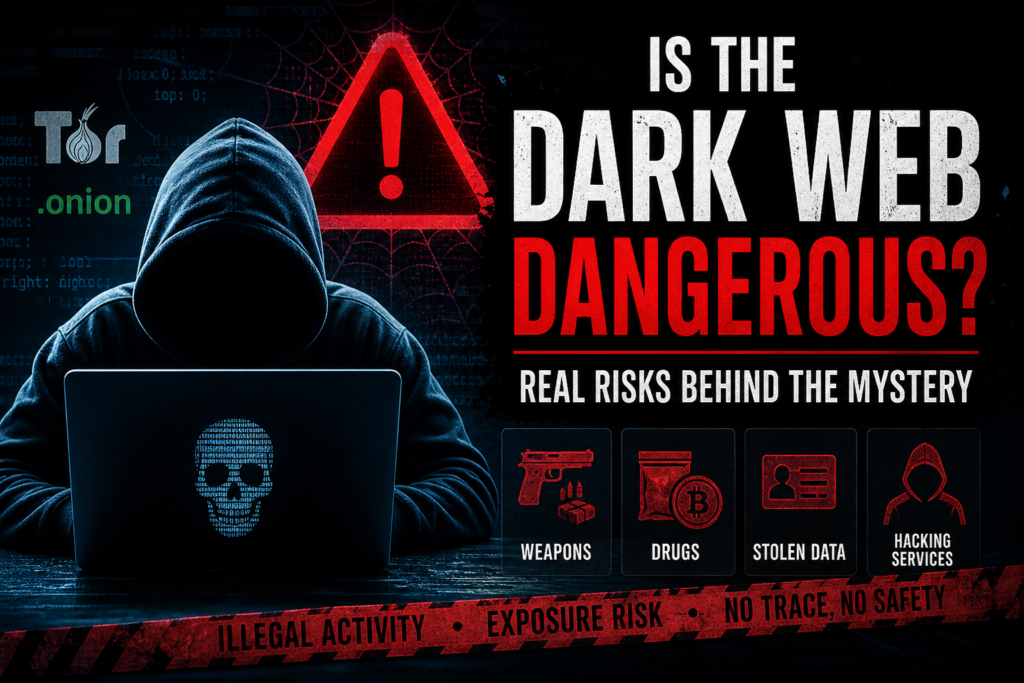
The dark web may seem like an underground network that is synonymous with crime and mystery. It is portrayed in the media as a source of danger, which creates intrigue as well as fear. In actuality, there is some truth between the two, especially when looking at real stories from dark web cases that involve scams, leaks, and illegal marketplaces. At the same time, many of these narratives blur into exaggeration, which is why discussions around dark web are so important to understand the bigger picture.
That is what results in the dark web being used legally or criminally, which also connects to the question of why is the dark web dangerous, since risks mainly arise from misuse, scams, and lack of regulation rather than the technology itself
What the Dark Web Actually Is
There are three primary layers of the internet which complement each other but have different uses. The vast majority of people are involved solely in the surface web on a day-to-day basis.
Surface web – open internet such as social media, news and retail websites
Deep web – private information such as emails, financial services and medical information
Dark web – secret sites accessible through anonymizing networks such as the Tor browser
The dark web relies on anonymization networks that conceal the identities of users and websites in question. Such technologies allow for anonymity and therefore less transparency than usual. For this reason, legal as well as illegal activities can take place on the dark web.
Why the Dark Web Feels So Dangerous
It is because of the anonymity of the dark web that people have such a feeling of dread toward it. The natural tendency of the human mind and its portrayal by the media bring about such a condition.
Factors that scare people regarding the dark web:
- Anonymity is very high, making it difficult to trace anyone
- Black market exists in many descriptions of the dark web
- Hackers target relatively new users on the network
- Lack of any regulation leads to people behaving badly
It can be termed a dual-sided aspect, as anonymity exists on one side, but accountability does not, hence making people act irresponsibly.
But as usual, curiosity gets the better of the individual.
Illegal Markets and Scam Activity
One of the most famous uses of the dark web includes illegal marketplaces. The concept behind such sites involves conducting e-commerce while staying anonymous and beyond reach of the law. Although they look professional, they turn out to be very unreliable.
However, trust within this environment is extremely low. Buyers tend to pay for products that never arrive. Sometimes websites simply close without providing any goods after collecting their money, and sometimes, these sites are created solely as frauds from the start.
Examples of threats may include:
- Payment without shipping
- Fraudulent listings made up to deceive people
- Sudden closure of whole websites as an exit scam
- Cross-site fraud schemes involving many profiles
With absolutely no regulations and protections, all deals are uncertain.
Cybersecurity Threats and Malware Risks
Yet another major threat associated with the dark web is cybersecurity. Many sites offer downloads that appear to be normal apps or files but are actually malicious. Real stories from dark web users often highlight how easily such software can infect a system without the user realizing it. Once installed, these programs can cause serious damage, reinforcing why is the dark web dangerous for unsuspecting users.
Some examples of cybersecurity threats include:
- Viruses
- Spyware
- Ransomware
- Keylogger
These malicious applications can perform activities like stealing login credentials, monitoring user activity, or encrypting files for ransom. When discussing dark web myths, a common myth is that only careless users fall victim to such threats. In reality, even cautious users can be exposed due to the deceptive nature of these files.
Identity Theft and Data Exposure
Identity theft has a direct relationship with activities in the dark web. Hackers always trade personal data in these concealed markets.Hackers frequently trade personal data in these concealed marketplaces, and real stories from dark web investigations show how quickly stolen information can circulate once it appears there.highlights why is the dark web dangerous for individuals and organizations alike. After this information ends up in the dark web, it becomes very hard to get rid of or manage the data.
repeated resale across multiple platforms. When looking at dark web myths vs reality, one common myth is that only people who actively browse the dark web are at risk. These may be used for fraud and resold.
Victims of identity theft experience devastating results. Victims incur losses, account hacking, and misuse of their identities. It can happen even to individuals who do not make use of the dark web.
Law Enforcement and Legal Consequences
Most individuals believe that the dark web ensures anonymity. However, this perception is wrong since law enforcement agencies monitor the activities carried out in secret networks.
There exist various ways that law enforcement agencies use to track any illegal activities taking place within these networks. They include conducting investigations in the form of covert operation as well as investigating cryptocurrencies transactions. Various illegal websites dealing with drugs and other illegal commodities have been taken down due to international collaboration.
- Among the legal considerations in the use of the dark web are:
- The fact that there is active surveillance in the network
- Cryptocurrency is not completely anonymous
- The fact that there are digital tracks even for hidden networks
- Collaboration among international organizations when dealing with cyber crimes
Psychological and Personal Risks
Beyond these security issues, the user may face other psychological risks while using this dark web.and real stories experiences often reveal how sudden exposure to disturbing material can have lasting emotional effects. Viewing such offensive and illegal contents might cause mental trauma.This highlights why is the dark web is dangerous, not only from a technical standpoint but also from a mental health perspective.
Unpredictability of the contents is yet another reason why this website is highly dangerous, particularly for new users. Unlike the conventional internet, this website does not have any form of warning or limitation concerning certain contents.
Common Misconceptions About the Dark Web
A variety of myths have been created surrounding the dark web and its perception by the general populace.Exploring reality helps to clarify these misunderstandings and present a more balanced perspective. Such myths always result in an overreaction or an incorrect reaction.
- The dark web is not solely employed for criminal activities.
- The dark web is not able to provide full anonymity.
- It is not easy to access the dark web.
- The dark web is not wholly chaotic.
- Privacy does not necessarily equate to safety.
This has great importance since such myths affect people’s decision-making processes. Fear inhibits exploration, whereas confidence encourages it.
How People Accidentally Get Exposed
Most people tend not to access the dark web intentionally. Access is possible as a result of either curiosity and/or poor use of the internet.This is where the conversation around dark web becomes important, as not every encounter is as extreme or dangerous as often portrayed. The individual could be using the internet without understanding the link that they are clicking or the software they are downloading.
By learning from real stories from navigating dark web encounters, users can better recognize potential risks and make more informed decisions when the digital world.
The causes of such behavior are usually:
- Clicking suspicious links
- Downloading unsafe software
- Inappropriate information from the internet
- Using unsafe privacy software
How to Stay Safe Online
Insights from real stories from dark web contexts further support this understanding. Many documented incidents involving cybercrime begin with simple user errors, such as clicking on malicious links, reusing passwords, or downloading unverified files, rather than direct interaction with the dark web itself. This is where understanding dark web becomes important, as it helps separate exaggerated fears from practical digital risks.
Other actions one needs to take include the following:
- Do not provide personal data to websites you do not trust
- Download reliable anti-virus software
- Do not click on links requesting personal details
- Utilize secure connections and avoid using wireless networks
- Check finances on a regular basis
Ultimately, dark web myths vs reality helps clarify that online safety is less about avoiding specific sections of the internet and more about building consistent, informed security practices. By learning from real stories from dark web situations, users can better recognize risks and adopt behaviors that protect them across all online environments.
Conclusion
Dark Web neither poses an entirely risky nor completely safe environment online. It is a secret corner of the internet, Understanding dark web is essential to avoid exaggerated fear while still recognizing genuine risks. As a result, dark web features advantages as well as dangers.
These are illegal market sites, scams, hacking malware, frauds, and cyber surveillance practices. At the same time, it is also a space where individuals can satisfy privacy needs in certain circumstances.This is where understanding dark web helps users separate unnecessary fear from informed caution. Learning from real stories from dark web situations encourages users to focus less on fear-driven assumptions and more on practical digital safety habits. .
Awareness about the issue makes one feel less scared about it.